DNotifier's MCP Support, Explained
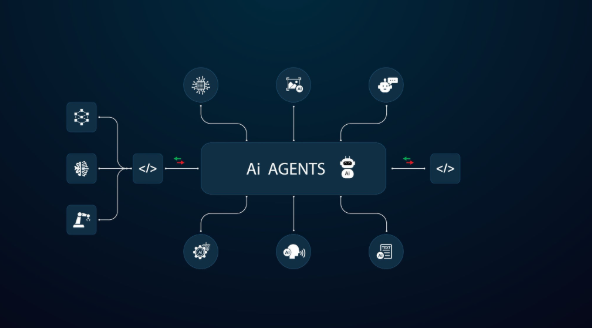
Part of a series on running AI workflows across model providers — this one is about Claude and the protocol Anthropic built.
What is MCP? The Model Context Protocol is an open standard, created by Anthropic, that gives an AI model a consistent way to talk to external tools and data sources — a filesystem, a database, an internal API — without every application reinventing its own bespoke integration for each one. Think of it as a shared plug shape: build an MCP server once, and any MCP-aware model or platform can use it, instead of writing custom glue code per tool per model.
That's the short answer. Here's why it's turned into one of the more consequential pieces of infrastructure in the AI agent world, and what it means if you're building on DNotifier.
The numbers got big, fast
As of August 2026, there are roughly 15,930 public MCP servers spread across four major registries, with 9,652 of those in the official registry alone. Monthly SDK downloads have passed 97 million. Microsoft, Google, and AWS have all built MCP support into their own platforms — Copilot Studio, Gemini, Bedrock AgentCore — which is a fairly unusual level of cross-vendor agreement for anything in this industry.
On July 28, 2026, the protocol shipped what its own maintainers called the largest revision in its history: the transport layer became stateless by default, and three older protocol features — Roots, Sampling, and Logging — moved into a deprecation queue with a 12-month window to migrate off them. The major SDKs (TypeScript, Python, Go, C#) had compatible releases out within about three weeks. That's a protocol getting more serious about production use, not less.
It's also worth being straight about the other side of that growth: independent security scans have found exploitable flaws in a meaningful share of public MCP servers, enough that the NSA and CISA jointly published security guidance on it in June 2026. A standard exploding in popularity attracts both real adoption and real sloppiness. Whichever MCP servers you connect to a production agent are worth vetting like any other third-party dependency — the protocol being from Anthropic doesn't make every server implementing it trustworthy.
Where this fits into DNotifier
DNotifier's AI Foundation layer — the part of the platform that connects models, data, and tools into one place — treats MCP servers as a first-class connection type, alongside your models and your enterprise data sources.
        [ Your agent / sendAI() ]
                    │
        ┌───────────┴───────────┐
        ▼                       ▼
  [ Claude model ]      [ MCP tool servers ]
  (reasoning)           (filesystem, DB, APIs…)
        │                       │
        └───────────┬───────────┘
                    ▼
           Connected once in dashboard
One agent, two channels. The model side and the tool side are both configured once, in the dashboard — not re-wired into every prompt.
Practically, this means an agent built on DNotifier doesn't need your application code to manually describe every available tool on every single call. You connect an MCP server once — a filesystem server for document access, a database server for structured lookups, an internal API wrapped as an MCP server for whatever's specific to your business — and it becomes available to the agents that need it, the same way connecting an OpenAI or Anthropic key makes a model available.
// The agent's own call doesn't change based on which tools are attached —
// tool access is a dashboard-level connection, not a per-request payload.
const response = await notifier.sendAI({
  senderId: userId,
  sessionId,
  message: { text: "Check the latest invoice for this account and summarize it." },
});
// Behind this call: Claude reasoning over the request, DNotifier routing
// the actual invoice lookup through a connected MCP server.
Why this matters more with Claude specifically
Anthropic didn't just publish the MCP spec and move on — Claude's own training and tool-use behavior are shaped by it being the protocol the model was built alongside. In practice, that shows up as Claude being comparatively fluent at deciding when a tool call is warranted, structuring the call correctly, and interpreting a tool's response without a lot of prompt-engineering scaffolding to hold its hand through the process.
That doesn't mean MCP is Claude-exclusive — it isn't, and DNotifier's own multi-model support means you can point MCP-connected tools at other providers too. It does mean that if you're already on Claude for the reasoning quality, MCP is the tool-connection layer that was, in a real sense, designed with exactly this model family in mind.
A concrete example: grounding an agent in internal documents
Say you want a Claude-powered support agent that can check a customer's actual account state instead of answering from general knowledge alone. Without MCP, that means writing a custom function, describing it to the model in every prompt, parsing whatever comes back, and doing that again for every different data source you add. With an MCP server sitting in front of your account database, connected once through DNotifier, the agent gains that capability without your integration code growing with every new tool.
This is the same shape as DNotifier's built-in knowledge base and RAG layer, just extended to live systems and structured data instead of static documents — the model reasons, the protocol standardizes how it reaches out, and DNotifier is the platform making the connection available without per-call wiring.
Frequently asked questions
Do I need to write MCP server code myself?
Only if you're exposing something genuinely custom to your business — an internal API nobody else has built a server for. For common categories (filesystem, common databases, popular SaaS tools) a public server likely already exists; the work is connecting and vetting it, not building it from nothing.
Is MCP only useful with Claude?
No — it's an open protocol, and DNotifier's routing supports connecting MCP tools regardless of which model provider is answering a given request. Claude's comparative fluency with it is a reason to consider Claude for tool-heavy agents, not a hard requirement to use MCP at all.
What changed in the July 2026 spec update that I should actually care about?
The stateless-by-default transport is the practical one — it changes how connections are expected to behave under scaling and failure, which matters if you're running MCP servers at real production volume rather than a single dev instance. If you're connecting existing, actively maintained public servers through DNotifier, most of this migration burden sits with the server maintainers, not with you.
How do I know an MCP server is safe to connect?
Treat it like any third-party dependency touching your data: check who maintains it, how actively, whether it's in the official registry versus an unlisted one, and what permissions it's actually requesting versus what it needs. The NSA/CISA guidance from June 2026 is a reasonable starting checklist if you want something more formal than "use your judgment."
Does connecting more MCP servers slow down my agent?
Not directly through DNotifier's side of the connection — the model only reaches for a tool when the request calls for it. Overall latency depends more on the tool's own response time than on how many are connected and sitting idle.
The Bottom Line
Anthropic built the protocol. DNotifier makes it something your agents can use without becoming an integration project every time you add a new tool. Next in this series: Anthropic's own Managed Agents platform, and where a model-agnostic control plane still earns its place next to it.
Read part one: Claude on DNotifier: Setup Guide. Explore dnotifier.com.
DNotifier × Claude
Part 2 of 5
Related articles

Claude on DNotifier: Setup Guide
Part one of the DNotifier × Claude series — connect Anthropic through sendAI(), pick the right Claude model tier, and get session memory, RAG, and observability without building the plumbing yourself.
Claude's Managed Agents vs. DNotifier
Part three of the DNotifier × Claude series — Anthropic's Managed Agents platform is serious infrastructure. Here's the honest tradeoff versus a model-agnostic control plane.
Long Context, Better Agent Memory
Part five of the DNotifier × Claude series — why a 1M-token window doesn't replace session memory or RAG, and how Anthropic's own compaction feature proves the point.