OpenAI's Agents API vs. DNotifier: A Managed Harness or a Model-Agnostic Control Plane?
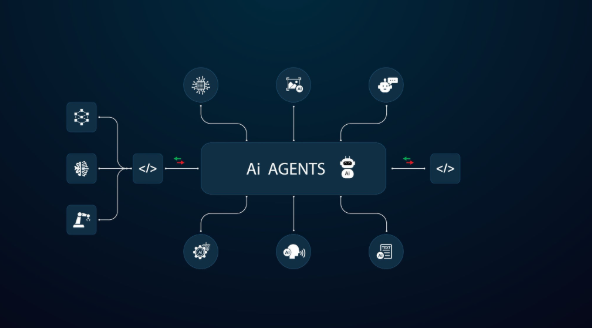
Part two of our OpenAI series. Part one covered the basic integration — this one is about a genuinely important product decision that showed up in the news this month.
On September 10, 2026, OpenAI shipped the Agents API into public beta. If you build AI agents for a living, you probably already saw the headlines, and if you didn't, here's the short version: it's a managed service, built on the same harness behind OpenAI's Codex work, that handles automatic context compaction, tool search and routing, durable multi-hour sessions, and delegation between subagents — all behind a single API call. Coverage of the launch was pretty direct about what it's replacing: work that "frameworks like LangGraph and CrewAI helped with, but the operational burden of stitching everything together stayed with the developer."
That's a meaningful release, and it's worth taking seriously rather than dismissing as "just another wrapper." It also raises a question we get asked a lot now: if OpenAI is willing to handle orchestration itself, why would anyone reach for a separate infrastructure layer like DNotifier?
The honest answer is: for a lot of teams building entirely on OpenAI models, with no near-term plans to use anything else, the Agents API is a genuinely good option, and we're not going to pretend otherwise. This post is about the specific tradeoff you're making either way, because it's a real one, not a marketing one.
What the Agents API is actually good at
Give credit where it's due. Automatic context compaction is a real, annoying problem that most teams solve badly on their first attempt — you either truncate context and lose something important, or you let it grow until costs and latency both get ugly. Having that handled for you, tuned by the people who built the underlying model, is genuinely useful. Same goes for tool search and routing across a large tool library, and for durable sessions that survive longer than a typical request lifecycle without you building your own persistence layer for it.
If your product is built entirely on OpenAI models today and you expect that to stay true, adopting the Agents API means less code for you to own for exactly the orchestration problems it targets. That's a legitimate reason to choose it.
The tradeoff nobody puts in the launch announcement
Here's the part that matters for anyone thinking past the next six months: the Agents API is a single-vendor harness. The orchestration layer and the model layer are the same company. That's not a hidden flaw — it's just structurally what it is, and it has real consequences:
None of this means the Agents API is bad. It means it's optimized for a specific bet: that you want to go deep on one provider and get their best-in-class orchestration tooling in exchange. That's a real, sometimes correct, strategic choice.
Where DNotifier sits differently
DNotifier's starting assumption is the opposite one: the model layer and the orchestration layer are separate concerns, and coupling them is a cost you pay later even if it feels free now. Practically, that means:
OpenAI Agents API (coupled harness):
  [Your App] ──► [ OpenAI Agents API ─ orchestration + models together ]

DNotifier (decoupled control plane):
  [Your App] ──► [ DNotifier orchestration ] ──► [ OpenAI ]
                                         └──► [ Claude / Gemini / … ]
The orchestration box on the right doesn't change when you add a second model provider. The one on the left is the model provider.
The same sendAI() call and the same workflow/agent definitions run regardless of which provider is configured underneath. Want GPT-4o handling one agent in a pipeline and Claude handling another, in the same workflow, sharing the same session state? That's a normal configuration in DNotifier, not a special integration project. Want to run a controlled comparison before switching providers for a specific workload? That's the Prompt Testing Studio, not a migration.
There's also a scope difference worth naming honestly: the Agents API is specifically an agent-orchestration product. DNotifier's platform bundles that orchestration layer together with realtime messaging, pub/sub, persistent chat, and a knowledge base/RAG layer that doesn't require you to stand up a separate vector database. If orchestration is the only piece you need, that difference in scope might not matter to you. If you're also building the realtime chat surface, the notification layer, and the retrieval system around your agents — which most production products end up needing — it's the difference between one platform and several separately-integrated tools.
A side-by-side, without the spin
| OpenAI Agents API | DNotifier | |
|---|---|---|
| Model flexibility | OpenAI models only | OpenAI, Anthropic, Gemini, Bedrock, and others behind one interface |
| Orchestration | Built-in, managed, deeply tuned for OpenAI's own models | Built-in, provider-agnostic, works the same regardless of model |
| Durable sessions / memory | Yes, managed | Yes, tied to sessionId, provider-independent |
| Tool routing | Yes, native to the harness | Yes, via workflow/agent definitions |
| Realtime messaging & pub/sub | Not part of this product | Built into the platform |
| Knowledge base / RAG | Not part of this product | Built-in, no separate vector DB to run |
| Vendor concentration | Single vendor by design | Spread across whichever providers you connect |
| Best fit | Teams fully committed to OpenAI, wanting the least code to own | Teams that want orchestration decoupled from any one model vendor, or need realtime/RAG in the same stack |
So which one should you actually use?
If your product is OpenAI end to end, you're comfortable with that commitment, and orchestration is the only infrastructure gap you have — the Agents API is a legitimate, well-built option, and you should evaluate it on its own merits rather than assuming you need a third-party layer on principle.
If any of the following is true, a model-agnostic layer earns its place: you want the option to compare or mix providers without a rewrite; you need realtime communication or a knowledge base alongside orchestration, not as separate procurement decisions; you're selling into enterprises or government buyers who will ask about vendor concentration as a real risk factor, not a hypothetical one; or you've simply been burned before by a single-vendor dependency you didn't choose deliberately.
We'd rather you make that call with the actual tradeoff in front of you than with a comparison chart that pretends there's only one right answer. There usually isn't, and anyone telling you otherwise is selling something a little too hard.
Frequently asked questions
Can I use both — the Agents API for OpenAI-specific work and DNotifier for everything else?
Technically, yes — DNotifier doesn't prevent you from also using OpenAI's native tooling elsewhere in your stack. Most teams we talk to end up picking one as the primary orchestration layer for a given product, though, since running two orchestration systems side by side adds its own coordination overhead.
Does DNotifier support the same context-compaction behavior the Agents API offers?
Session memory in DNotifier manages conversation history across turns, and workflow state is scoped per run — but if you specifically need OpenAI's proprietary compaction algorithm tuned to their own models, that's something only their harness provides today. Worth testing against your actual context lengths before assuming either approach handles your worst case gracefully.
Is this an argument that DNotifier is "better" than OpenAI's own tools?
No — it's an argument that they solve for different priorities. OpenAI's Agents API optimizes for depth on one provider. DNotifier optimizes for flexibility across providers plus the surrounding infrastructure. Which one is "better" depends entirely on which of those you need more.
How hard is it to switch from a single-vendor setup to DNotifier later, if I start with just OpenAI?
If you start on DNotifier with just OpenAI connected, there's nothing to switch — you're already on the model-agnostic path, you're just only using one lane of it. Migrating away from a vendor-specific harness after the fact is a heavier lift, which is the main reason to think about this decision early rather than after you've built around it.
The Bottom Line
If you want to see the model-agnostic approach in practice, part one of this series walks through a real OpenAI integration end to end, and part three shows what it looks like once you're coordinating several specialized agents on a single support ticket instead of one agent answering one question.
Read part one: Building AI Agents on OpenAI with DNotifier. Explore the platform at dnotifier.com.
DNotifier × OpenAI
Part 2 of 3
Related articles

Building AI Agents on OpenAI with DNotifier: A Practical Integration Guide
Part of a series on AI workflows across model providers — connect OpenAI through one sendAI() integration, with session memory, RAG, prompt testing, and observability handled for you.

Building a Production Multi-Agent Customer Support System with OpenAI and DNotifier
Part three of our OpenAI series: three specialized agents, shared workflow state, cost-tiered models, and a human approval gate — built with defineAgent and Workflow, not pseudocode.
Claude's Managed Agents vs. DNotifier
Part three of the DNotifier × Claude series — Anthropic's Managed Agents platform is serious infrastructure. Here's the honest tradeoff versus a model-agnostic control plane.