AgentCore vs. DNotifier
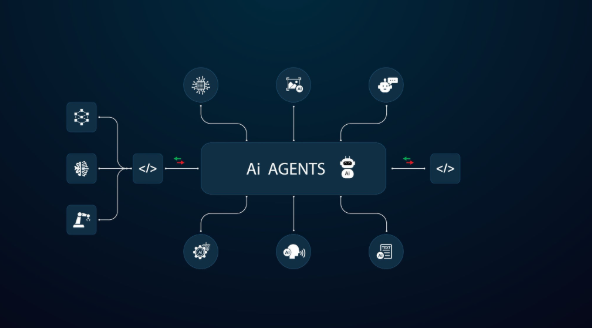
Part of a series on running AI workflows across model providers — this one is a direct, honest comparison between two different answers to "how do I run agents in production."
AgentCore and DNotifier solve overlapping problems from genuinely different starting points, and the honest comparison gives real credit to both rather than picking a winner across the board.
What AgentCore does well
AgentCore's strength is depth on the AWS-native infrastructure side of running an agent: session-isolated serverless execution (Runtime), OAuth-backed identity for calling third-party services without hardcoded credentials (Identity), turning existing APIs into agent-callable tools without custom glue code (Gateway), and deep observability integration with tools teams already use, like CloudWatch, Datadog, and Dynatrace, via OpenTelemetry. For a team already deep in AWS, with VPC and PrivateLink requirements from a security review, and comfortable committing to that ecosystem, AgentCore's enterprise features — extended eight-hour execution windows, resource tagging, CloudFormation support — are genuinely strong, not marketing checkboxes.
What DNotifier does instead
DNotifier isn't AWS-native, and that's a deliberate design choice rather than a gap: defineAgent and Workflow primitives run the same way regardless of which cloud or which model provider sits underneath a given step, with orchestration, real-time communication, session memory, and built-in semantic search unified into one runtime rather than assembled from separately billed services. Where AgentCore's model is "compose the AWS-native services your agent needs," DNotifier's model is "one runtime handles orchestration and infrastructure together, and the model provider underneath any given step — Bedrock or otherwise — is a configuration choice, not an architectural commitment."
AgentCore composes seven separately billed AWS services. DNotifier bundles equivalent capability into one runtime, cloud-agnostic by design.
The honest tradeoff, named plainly
AgentCore's AWS-native depth is also its constraint: adopting it commits you more deeply to AWS's specific services, billing model, and operational patterns (IAM, VPC, CloudFormation) even though it supports non-AWS models and frameworks in principle. DNotifier's cloud-agnostic design means less AWS-specific depth — no built-in equivalent to AgentCore Browser's managed web-automation environment, for instance — in exchange for not coupling your agent architecture to any one cloud's roadmap or service boundaries. Neither is a strictly better choice; they optimize for different constraints.
Where they can actually work together
These aren't mutually exclusive. A team could run AgentCore Runtime for AWS-native execution and identity handling on a specific agent, while using DNotifier to orchestrate a broader multi-agent workflow that spans that AWS-hosted agent alongside steps calling entirely different providers — Anthropic, Gemini, or a self-hosted model — from the same workflow. The comparison in this article is about which one to lean on as your primary orchestration and infrastructure layer, not a claim that they can't coexist in a broader architecture.
A workflow doesn't have to choose one infrastructure layer exclusively — it can call into an AgentCore-hosted agent as one step among several.
A real use case: choosing based on where the team actually was
A platform engineering team evaluating both for a multi-agent customer-operations system had a decisive factor that had nothing to do with either product's feature list: half their planned agents needed deep AWS-native tool access (internal APIs already exposed as Lambda functions, Slack notifications via OAuth), and half needed to call a mix of model providers that weren't AWS-native at all, coordinated through workflows that didn't map cleanly onto any single cloud's services. They ended up using AgentCore Gateway and Identity specifically for the AWS-tool-heavy agents, while DNotifier orchestrated the overall multi-agent workflow spanning all of them — using each tool for the part of the problem it was actually built for, rather than forcing the whole system through one architecture.
Frequently asked questions
Is AgentCore only usable if my models are hosted on Bedrock?
No — AWS's documentation states AgentCore supports foundation models in or outside of Bedrock, including from other providers.
Does DNotifier require using AWS at all?
No — DNotifier is cloud-agnostic. It can call Bedrock as one of several connected providers, but doesn't require an AWS account for any of its other providers or core functionality.
Which one has better observability?
Both provide real observability — AgentCore integrates with AWS-native and third-party tools like CloudWatch and Datadog via OpenTelemetry; DNotifier's dashboard shows workflow execution graphs and per-step tracing natively within the platform. Which fits better depends on whether your team already lives in AWS-native monitoring tools.
Can I migrate from AgentCore to DNotifier, or the reverse, later?
Because AgentCore supports open frameworks and non-AWS models, and DNotifier's workflow primitives aren't tied to any one provider, a later migration is more about re-wiring orchestration logic than starting over from nothing — but neither is a zero-effort switch.
The Bottom Line
Next in this series: Bedrock's managed Knowledge Bases feature compared with DNotifier's built-in semantic search, for teams deciding where their RAG pipeline should actually live.
Read part nine: Bedrock Knowledge Bases vs. DNotifier RAG. Explore dnotifier.com.
DNotifier × AWS Bedrock
Part 8 of 10
- Part 1Bedrock on DNotifier: Setup Guide
- Part 2What Is AWS Bedrock?
- Part 3Amazon Bedrock AgentCore, Explained
- Part 4Bedrock Agents Classic Is Being Retired
- Part 5Choosing a Model on Amazon Bedrock
- Part 6AWS Bedrock Pricing, Explained
- Part 7Bedrock Guardrails vs. DNotifier's Approach
- Part 8AgentCore vs. DNotifier
- Part 9Bedrock Knowledge Bases vs. DNotifier RAG
- Part 10Avoiding Lock-In: Bedrock and Beyond
Related articles
Bedrock Guardrails vs. DNotifier's Approach
Part seven of the DNotifier × AWS Bedrock series — model-call content safety versus workflow approvals, escalations, and why both layers matter.

Bedrock Knowledge Bases vs. DNotifier RAG
Part nine of the DNotifier × AWS Bedrock series — enterprise connectors versus unified runtime RAG, and picking retrieval per document set.
Amazon Bedrock AgentCore, Explained
Part three of the DNotifier × AWS Bedrock series — Runtime, Memory, Gateway, Identity, and the other AgentCore services for production agents on AWS.