Bedrock Guardrails vs. DNotifier's Approach
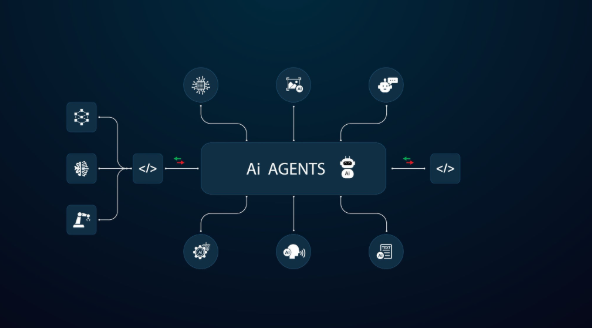
Part of a series on running AI workflows across model providers — this one is about two different layers of safety that people sometimes mistake for competing with each other.
It's a natural question once you've set up both: if Bedrock has Guardrails, and DNotifier has workflow-level controls like human approval steps, do you need both? The honest answer is yes, because they operate at different layers of the same system and catch different kinds of problems.
What Guardrails actually checks
Bedrock Guardrails sits at the model-call layer, applied to a request and response before either reaches your application code. Its checks include configurable content filters for harmful text and image content (hate speech, violence, prompt-injection attempts), a denied-topics list for subject matter you want blocked outright, word filters for profanity or specific terms like competitor names, PII redaction that masks or blocks sensitive personal information, and a contextual grounding check that flags responses not actually supported by the source material you gave the model — a direct hallucination check. Notably, Guardrails works with any foundation model, whether it's hosted on Bedrock or self-hosted elsewhere, so it's not locked to Bedrock-only deployments.
Guardrails answers one question: is this individual model call's content safe and grounded?
What it doesn't check
Guardrails operates on a single call's content — it doesn't know whether a multi-step workflow is doing something it shouldn't, whether an agent is about to take an action with real consequences (sending an email, issuing a refund, modifying a record), or whether a human should look at something before it goes out. Those are workflow-level questions, not content-level ones, and they're a different kind of control entirely.
What DNotifier's workflow-level controls handle instead
A Workflow built with DNotifier can include explicit human-approval steps before a consequential action executes, route based on a confidence score an agent produces, or escalate to a different agent or a human when something falls outside expected bounds — all decisions made about the shape and progression of a multi-step process, not about whether one piece of generated text contains a slur or a leaked phone number. The observability dashboard then shows exactly which step a workflow took and why, which is a different kind of visibility than a per-call content check provides.
A refund-issuing agent needs both: Guardrails checking the generated message isn't harmful, and a workflow-level approval step checking that issuing the refund itself is the right call.
Why "use both" is the honest answer, not a hedge
Consider a customer-support agent that can issue refunds. Guardrails can confirm the message it's about to send doesn't contain harmful content or leaked PII — but it has no concept of whether issuing a $400 refund for this particular ticket is the correct business decision. That's a workflow-level judgment: maybe refunds above a threshold need human sign-off, maybe certain ticket categories always escalate. Layering a DNotifier workflow's approval step on top of a Guardrails-checked model call means both the content and the action are being verified, at the layer each one is actually equipped to check.
A real use case: catching two different failure modes in one workflow
A team building an internal expense-approval assistant on Bedrock ran into exactly this split. Guardrails caught a real issue early: a rare model output that included a fragment of what looked like an employee's card number, pulled inadvertently from a source document during a RAG lookup — exactly the kind of PII leak Guardrails is built to block. Separately, entirely undetectable by any content filter, the workflow's own approval-step logic caught a different problem: the model had reasonably summarized an expense as compliant with policy, but the workflow's own threshold rule correctly required human sign-off anyway because the amount crossed a dollar threshold that had nothing to do with the content of the message at all. Neither layer could have caught the other's failure mode.
Frequently asked questions
Can I use Bedrock Guardrails without using DNotifier's workflow features?
Yes — Guardrails operates independently at the model-call layer regardless of what orchestrates the calls around it.
Does DNotifier have its own content-filtering equivalent to Guardrails?
DNotifier's workflow controls are about the shape and progression of a process — routing, approval, escalation — rather than per-message content filtering. Guardrails and similar model-level safety features remain the right tool for that specific job.
Is it redundant to run Guardrails on a model call that's already inside an approved workflow?
No — they check different things. A workflow-level approval confirms an action is appropriate; Guardrails confirms the generated content itself is safe and grounded. A workflow can be entirely appropriate to run and still generate a harmful or hallucinated response inside it.
Does using Guardrails add noticeable latency?
Content filtering adds a modest processing step, generally small relative to the model call itself, though the exact impact depends on which checks are enabled.
The Bottom Line
Next in this series: a direct comparison between AgentCore and DNotifier as two different approaches to running AI agents in production.
Read part eight: AgentCore vs. DNotifier. Explore dnotifier.com.
DNotifier × AWS Bedrock
Part 7 of 10
- Part 1Bedrock on DNotifier: Setup Guide
- Part 2What Is AWS Bedrock?
- Part 3Amazon Bedrock AgentCore, Explained
- Part 4Bedrock Agents Classic Is Being Retired
- Part 5Choosing a Model on Amazon Bedrock
- Part 6AWS Bedrock Pricing, Explained
- Part 7Bedrock Guardrails vs. DNotifier's Approach
- Part 8AgentCore vs. DNotifier
- Part 9Bedrock Knowledge Bases vs. DNotifier RAG
- Part 10Avoiding Lock-In: Bedrock and Beyond
Related articles
AgentCore vs. DNotifier
Part eight of the DNotifier × AWS Bedrock series — AWS-native agent infrastructure versus cloud-agnostic orchestration, and when to use each or both.

AWS Bedrock Pricing, Explained
Part six of the DNotifier × AWS Bedrock series — on-demand vs provisioned vs batch, Knowledge Bases and Guardrails line items, and AgentCore billing.
Bedrock Knowledge Bases vs. DNotifier RAG
Part nine of the DNotifier × AWS Bedrock series — enterprise connectors versus unified runtime RAG, and picking retrieval per document set.