AI Agent Infrastructure Architecture: A Practical Breakdown
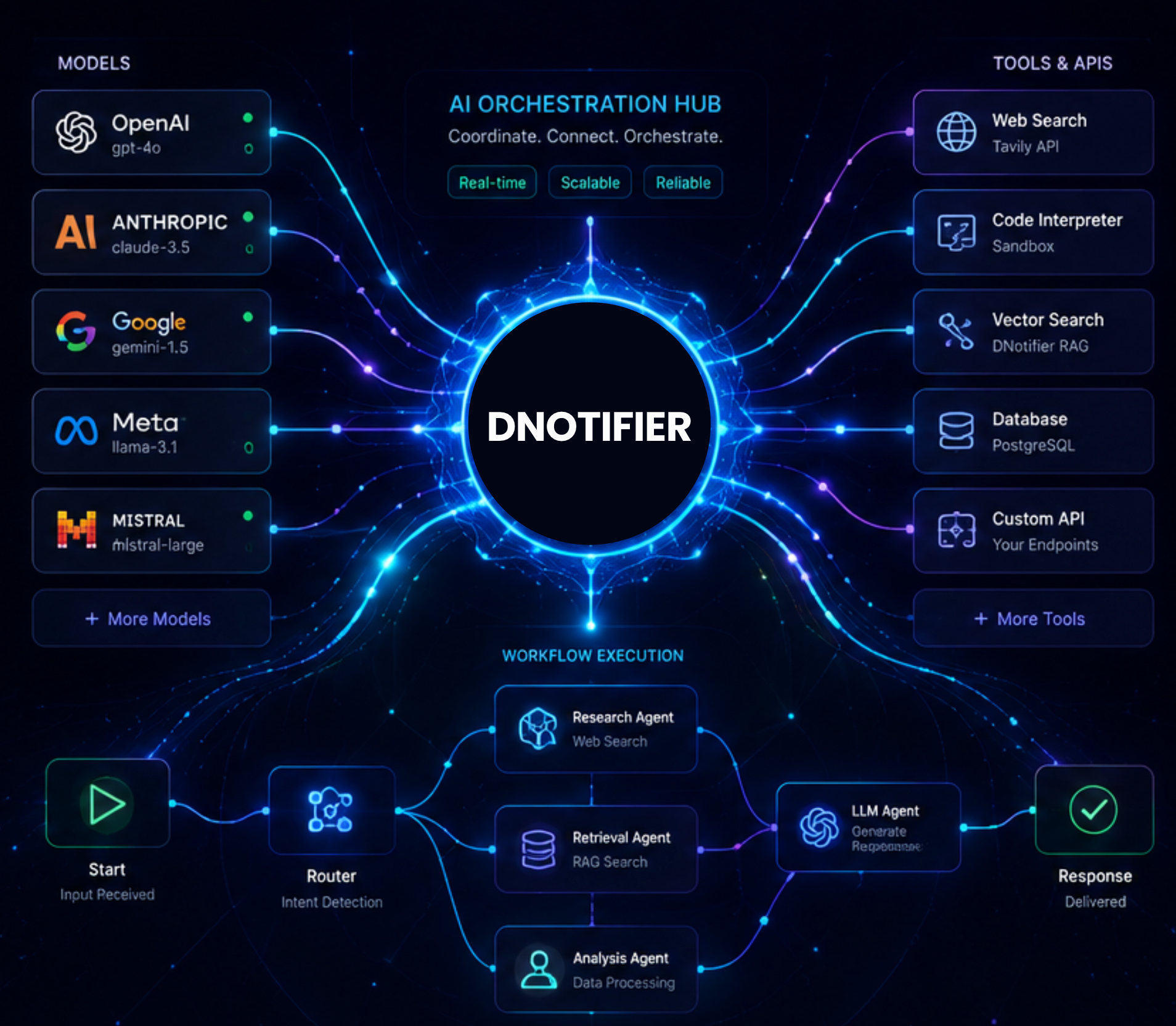
Your agent works great in a demo. Then real users show up and things start breaking. Nine times out of ten, that's not a model problem. It's an infrastructure problem.
AI agent infrastructure architecture is the difference between a system that survives production and one that quietly falls apart. It covers how your agents talk to each other, store state, call tools, and stay visible when something goes wrong. Get it right and scaling feels manageable. Get it wrong and every new feature is a risk you didn't sign up for.
Here's what actually goes into solid agent infrastructure. No hype. Just the parts that matter.
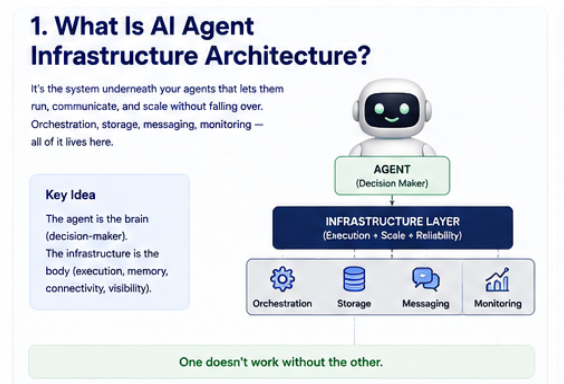
What Is AI Agent Infrastructure Architecture?
It's the system underneath your agents that lets them run, communicate, and scale without falling over. Orchestration, storage, messaging, monitoring — all of it lives here.
Think of the agent as the decision-maker. The infrastructure is what actually carries those decisions out, tracks them, and keeps things from collapsing under load. One doesn't work without the other.
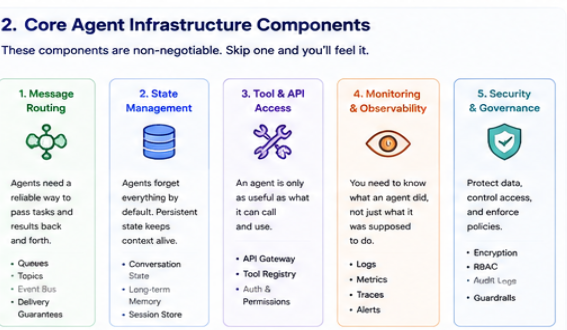
Core Agent Infrastructure Components
A few pieces are non-negotiable. Skip one and you'll feel it, usually at the worst time.
Message routing comes first. Agents need a way to pass tasks and results back and forth without dropping data along the way.
Then there's state. Agents forget everything by default. Unless you're storing context somewhere persistent, every interaction starts from zero.
Tool and API access matters too — an agent is only as useful as what it can actually call and use.
And monitoring. You need to know what an agent did, not just what it was supposed to do. Those are two very different things.
Put these agent infrastructure components together well and the system holds up. Rush any one of them and it shows.
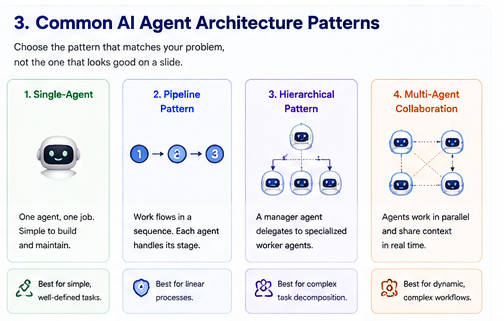
Common AI Agent Architecture Patterns
Not every use case needs the same setup. A handful of patterns keep showing up.
Single-agent is the simplest: one agent, one job. Fine until the task gets complicated.
Pipeline pattern passes work down a chain, each agent handling its own stage.
Hierarchical pattern has a manager agent delegating to specialized workers.
And multi-agent collaboration — several agents working in parallel, sharing context as they go.
Whatever you pick feeds directly into your broader AI agent infrastructure architecture. Match the pattern to the actual problem, not to what looks good on a slide.
Agent Orchestration Architecture Explained
Orchestration decides which agent does what, and when. Skip this layer and agents start stepping on each other or duplicating work nobody asked for.
A decent agent orchestration architecture handles routing, retries, and failure recovery on its own. You feel this most once agents start depending on each other's output.
This is honestly where a platform like DNotifier saves time. Its AI Orchestration and Multi-Agent Systems features handle the coordination piece, so you're not hand-building a scheduler from scratch.
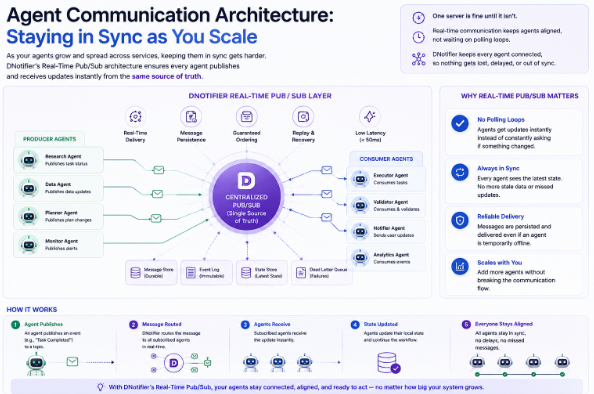
Agent Communication Architecture: Staying in Sync as You Scale
One server is fine right up until it isn't. Once agents are spread across services, keeping them in sync gets harder fast.
Real-time communication is the part people underestimate. Agents need to publish updates and hear about changes the moment they happen — not wait around on a polling loop.
DNotifier handles this through a centralized Real-Time Pub/Sub layer. Every agent talks to the same source of truth, so nothing drifts waiting on a message that got lost along the way. One agent thinks a task is finished. Another's still sitting there waiting on it this keeps that from happening.
Designing AI Agent System Architecture for Reliability
Once agents touch real users or real money, reliability stops being optional. This part is often what quietly makes or breaks AI agent infrastructure architecture at scale.
Your AI agent system architecture needs a clear answer to one question: what happened, and why. Not sometimes. Every time.
That means tracking decisions, not just outputs. Traceability lets you follow a request end to end, across every agent it passed through. DNotifier's Monitoring & Observability and Traceability features exist for exactly this problem — so when something breaks, you're finding it in minutes instead of digging through logs for hours.
Agent Backend Architecture: APIs, Storage, and Data Flow
The backend is where the actual work happens. Your agent backend architecture handles storage, API calls, and search — and it needs to do all of it without slowing agents down.
Semantic search matters more than people expect going in. Agents usually need relevant context pulled from big datasets, not just keyword hits. DNotifier's Semantic Search feature handles that natively, so agents retrieve what's actually useful instead of guessing.
Chat systems live here too, whenever agents talk directly to users. That interaction has to feel instant, even with several agents working underneath it.
Choosing an AI Agent Platform Architecture
Some teams build every piece themselves. Others pick a platform that's already solved the hard parts.
An AI agent platform architecture built on one SDK and one API, with multi-model support, cuts out a lot of that setup work. No stitching five tools together just to get agents talking.
Prompt testing matters here too. You want to know how an agent behaves under different prompts and edge cases before it goes live, not after.
FAQ
What's the difference between agent architecture and agent infrastructure?
Architecture is the blueprint. Infrastructure is what runs it. One defines how agents should behave; the other provides the servers, messaging, and storage that make that behavior real in production.
Do I need multi-agent architecture for a simple use case?
Not always. A single agent handles straightforward tasks just fine. Multi-agent setups start making sense once tasks split into distinct steps — research, drafting, review — that genuinely benefit from being separated.
How do I monitor agent behavior once it's live?
Track every action, not just the outputs. Logging alone won't catch it. You need traceability across the full request path, plus alerts when an agent starts acting outside expected patterns.
What usually causes AI agent infrastructure architecture to fail at scale?
Poor state management, most of the time. Agents lose context, duplicate work, or act on stale data. Weak orchestration and missing monitoring just make it harder to catch early.
Final Thought
AI agent infrastructure architecture isn't the flashy part of building agents. But it's the part that decides whether they actually hold up once real users show up.
Get the components right. Pick patterns that fit your use case. Build in visibility from day one. That's what separates agents that scale from ones that quietly fail somewhere in production.
Want to see how this looks in practice? Explore the SDK at dnotifier.com.
Related articles

How to Build AI Agent Infrastructure With DNotifier
One agent works until you add memory, a second agent, or production monitoring. Learn what AI agent infrastructure actually includes and how DNotifier delivers orchestration, events, search, and traceability in one SDK.
Build AI Agent Infrastructure: A Practical Guide
When real traffic hits, demos break without orchestration, memory, monitoring, and messaging. A practical order for building AI agent infrastructure—and when a unified platform beats stitching tools together.

How to Build Multi-Agent Systems
You add a second AI agent and coordination breaks down fast. Learn how to design orchestration, routing, traceability, and real-time communication before scaling your multi-agent AI system.