AI Agent SDK: Build Agents That Actually Work

AI Agent SDK: How DNotifier Helps You Build Agents That Actually Work
Building an AI agent sounds easy. Until you actually try it.
The model call takes ten minutes. Everything around it takes weeks.
Memory. Tool calls. Agents talking to each other without breaking anything. It piles up fast. Most teams end up gluing together four or five libraries just to get something that barely works. That's the gap an AI agent SDK is supposed to close. It's the exact gap DNotifier was built for.
What Is an AI Agent SDK?
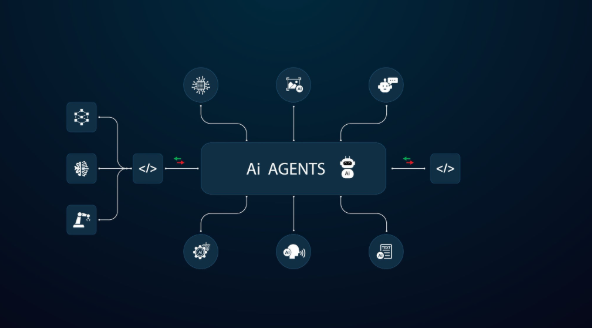
An AI agent SDK handles the plumbing behind AI agents: memory, tool calling, orchestration, agents talking to each other.
Skip one of those and you're writing it yourself. Every project, from scratch, again.
A decent AI agent framework hands you building blocks instead of a blank page. You decide what the agent should do. The SDK figures out how it gets done: state management, error handling, all of it.
Why Building AI Agents From Scratch Gets Messy
It usually starts small. A script calls an LLM, gets a response, done. Feels great for about a day.
Then the agent needs to remember earlier conversations. Then it needs to search your documents. Then two agents need to talk without stepping on each other's toes. Suddenly that "simple script" is a pile of custom code nobody wants to touch.
That's the real challenge in AI agent development. The infrastructure, more than the AI itself.
Teams keep rebuilding the same agent runtime logic over and over: state handling, retries, message passing, reinvented from zero each time. It's slow. And it's easy to get wrong in ways that don't show up until production.
DNotifier's AI Agent SDK: One SDK, One API
DNotifier gives you one SDK and one API for the whole agent lifecycle. You're not juggling five tools that don't talk to each other.
It supports multi-model setups too, so you're not locked into a single LLM provider. Swap models later without rewriting your agent logic.
The SDK covers what a real AI agent platform needs:
None of it feels bolted on. It's part of how the SDK is built, not a plugin you add later.
Multi-Agent Orchestration Without the Chaos
One agent is manageable. Get a handful working together, and that's usually where things fall apart.
DNotifier treats multi-agent systems as a real use case, not an afterthought. Agents can hand off tasks, share context, run in parallel. You're not stuck manually routing every message between them.
Picture a research agent pulling data while a writer agent drafts the summary. Or a support agent quietly escalating to a specialist mid-conversation. A proper multi-agent platform makes that kind of coordination feel almost dull. For infrastructure, that's a compliment.
RAG and Memory: Giving Agents Context
An agent with no memory is basically a chatbot wearing a costume. This is where RAG, retrieval augmented generation, earns its keep.
DNotifier's SDK includes semantic search, so agents pull relevant information from your documents instead of guessing from training data. Add agent memory and state management on top, and the agent actually remembers what happened three steps back.
Building a RAG pipeline on your own usually means wiring up a vector database, a retrieval layer, and a generation step as three separate headaches. DNotifier folds all of that into the same SDK you're already using for orchestration. One less system to babysit.
Observability and Traceability in Production
Building an agent is one thing. Trusting it once it's live is another.
AI observability means actually seeing what the agent is doing, not just reading the final output and hoping for the best. Which tool did it call? Why that response and not another? Where did it get stuck?
DNotifier builds monitoring and full traceability into the SDK itself. Every action gets logged and traced back to the decision behind it. When something breaks in production, and eventually something will, you're not debugging in the dark.
Usually this is the difference between a fun weekend demo and something a team can actually depend on.
Getting Started: Building Your First Agent
You don't need a massive project to try this. Start small.
One agent, one task, one tool call. Let DNotifier's SDK handle memory and orchestration instead of writing that yourself. Once that works, add a second agent. That's genuinely most of it.
Most people overbuild their first agent before it's even run once successfully. Don't be most people.
FAQ
What is DNotifier?
DNotifier is an AI agent SDK and API for creating, running, and monitoring AI agents in one place. Instead of stitching together separate tools for orchestration, memory, RAG, and observability, it wraps all of that into a single platform. A developer building an agent shouldn't need five accounts and five SDKs just to get a working prototype.
What is DNotifier used for in AI agents?
Teams use DNotifier for the parts of agent building that aren't the fun part: memory, tool calling, coordinating multiple agents, keeping track of what happened and why. Common uses include customer support agents that escalate to specialists, research agents that pull and summarize data, and RAG-based chat systems that answer questions from a company's own documents.
Is DNotifier an AI agent framework?
Yes, and a fairly complete one. It's not a thin wrapper around an LLM API call. DNotifier handles orchestration, multi-agent communication, memory, and observability as core parts of the framework, not optional extras bolted on later.
How does DNotifier work?
You define an agent's task, the tools it can use, and how it should behave. DNotifier's SDK manages the runtime: handling state, routing messages if multiple agents are involved, calling whichever LLM you've configured, logging everything along the way. The real-time pub/sub layer is what lets agents talk to each other without you writing custom messaging logic from scratch.
How do I build an AI agent with DNotifier?
Start small. Define one agent with a single, clear task and connect whatever tool or data source it needs. DNotifier's SDK handles memory and orchestration behind the scenes, so you're mostly focused on the agent's actual logic rather than the plumbing around it. Once that first agent works reliably, add a second one, connect them through orchestration, and build up from there.
How do I build a RAG application with DNotifier?
DNotifier's semantic search handles the retrieval side, so you're not separately standing up a vector database and wiring it into your generation step by hand. Connect your documents, and the SDK pulls relevant context before the agent generates a response. Combined with the built-in memory and state management, your RAG agent doesn't just answer one question well. It holds a longer conversation that stays grounded in your actual data.
Is DNotifier good for production?
It's genuinely built with production in mind, not just demos. The observability and traceability features let you watch what agents are doing after launch, not only while testing locally. When an agent behaves unexpectedly in production, and this happens to every team eventually, you can trace the exact decision path instead of guessing from the output alone.
The Bottom Line
An AI agent SDK isn't about making the model smarter. It's about making the system around it reliable—memory, tools, coordination, and visibility when something breaks.
DNotifier gives you all of that in one SDK so you spend less time wiring libraries together and more time building agents that actually work in production.
Explore DNotifier's SDK at dnotifier.com and start with one agent, one task, and infrastructure that scales from there.
Related articles
AI Agent Frameworks: Built for the Real World
Building a simple AI agent looks easy until you link two together or need context across sessions. Learn what agent frameworks actually do, why most break in production, and how DNotifier keeps multi-agent workflows stable.
What an AI Agent Dev Platform Actually Does | DNotifier
Demo agents are easy. Adding memory, a second agent, and production monitoring is where things fall apart. Learn what an AI agent development platform actually handles—and why it matters once you ship.
What Is an AI Agent Control Plane?
Agent code plans steps; the control plane enforces security, logs traces, and validates permissions. Learn what an AI agent control plane is, why teams need one, and how DNotifier delivers it.