What Is an AI Agent Control Plane?
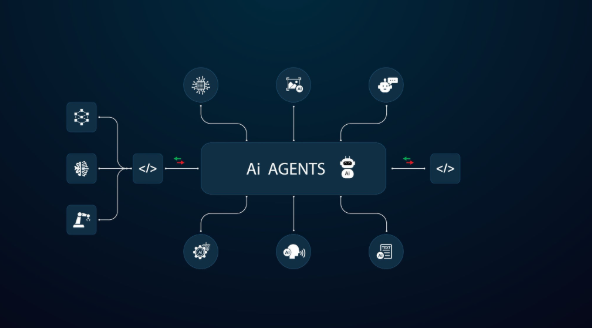
An AI agent control plane is a central layer managing how autonomous agents execute tasks, access tools, and share state. The data plane handles inference and tool calls. Meanwhile, the control plane enforces security, tracks events, and manages permissions. It separates operational logic from core model reasoning.
Definition: An AI agent control plane is an infrastructure layer enforcing security, task coordination, and telemetry across autonomous software agents.
In networking, control planes guide packet flow while data planes move bits. AI applications require the exact same separation. Your agent code plans steps and calls LLMs. Meanwhile, your control plane enforces rate limits, logs traces, and validates permissions before side effects occur in production.
Why Engineering Teams Need an AI Agent Operations Platform
Engineering teams need an AI agent operations platform to prevent system failures as autonomous workloads scale. Without centralized control, teams face prompt injections, runaway token costs, and uncoordinated task loops. An AI agent control plane gives developers complete visibility, runtime guardrails, and deterministic execution paths across every active agent.
Building a custom AI agent management platform from scratch wastes months of engineering effort. Teams often start with basic wrapper scripts. Soon, they struggle to manage agent memory, track multi-step interactions, and handle API retries.
Effective agent fleet management requires real-time telemetry and unified access controls. You need to know which model handled a query, what tools were triggered, and how much each transaction cost. Modern platforms simplify this by centralizing monitoring and observability into a single developer interface.
Core Layers of an Agent Control Plane Architecture
A complete agent control plane architecture consists of three primary functional layers: governance, orchestration, and telemetry. The governance layer enforces access permissions. The orchestration layer directs agent messaging and state storage. Finally, the telemetry layer logs execution traces and performance metrics. Together, these layers ensure reliable multi-agent system operations.
Designing a robust AI control plane architecture starts with policy enforcement at the gateway level. Every tool call passes through security filters before reaching external infrastructure. This prevents unauthorized database writes and blocks unintended web requests.
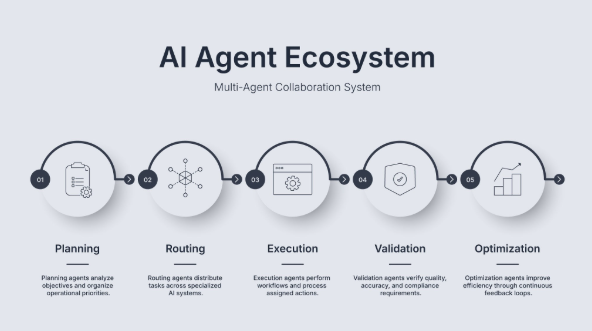
Next comes the orchestration engine. When building complex multi-agent systems, agents must communicate cleanly. Using real-time pub/sub messaging allows agents to exchange task updates without tight coupling. An agent governance platform coordinates these pub/sub channels while keeping event records fully audit-ready.
Managing the Agent Lifecycle Management Process
Structured agent lifecycle management covers every phase of an agent, from initial prompt testing to production deprecation. Developers must evaluate prompt variations, deploy versioned configurations, monitor runtime health, and gracefully retire inactive agents. An AI agent control plane automates these stages, ensuring consistent updates without breaking live customer workflows.
Siloed updates introduce regression risks into production environments. Effective AI agent management relies on automated prompt testing before rolling out new model versions. Developers test edge cases, evaluate output accuracy, and compare token usage in sandbox environments.

Once deployed, agents store contextual knowledge using semantic search and vector stores. This allows agents to retrieve relevant historical state during ongoing chat sessions. Control planes maintain these state references, preserving context across complex, multi-day user tasks.
How DNotifier Simplifies AI Agent Management
DNotifier provides a unified infrastructure layer that combines AI orchestration, monitoring, and multi-agent workflows into a single SDK. Instead of stitching together separate tools for pub/sub messaging, prompt testing, and chat systems, developers integrate one API. DNotifier acts as your complete AI agent control plane, delivering real-time observability across all LLM interactions.
DNotifier features native multi-model support, letting you route tasks to the best model dynamically. You can test prompts, track execution costs, and search state history using semantic search. Built-in traceability ensures every agent action is fully audited.
By decoupling control logic from model providers, DNotifier keeps your code clean and production-ready. You maintain full operational control while scaling agent fleets effortlessly.
If a control plane is the piece you're missing, DNotifier's plans start free and include this by default — not as an enterprise add-on.
Frequently Asked Questions About AI Agent Governance
What is the difference between an agent framework and an AI agent control plane?
Agent frameworks handle model reasoning and local tool execution. An AI agent control plane manages governance, security policies, and live telemetry across all running agents. Frameworks decide how agents think, while control planes determine what agents are allowed to execute.
How does a control plane handle memory across agents?
A control plane coordinates shared state using semantic search and centralized storage. It indexes historical interactions so multiple agents can access context securely without duplicating memory overhead.
Can an agent control plane work with multiple model providers?
Yes, modern control planes support multi-model routing across different LLMs. They dynamically forward requests based on cost, latency, capability, and availability requirements.
The Bottom Line
Scaling autonomous agents requires more than smart prompts. It demands reliable infrastructure that protects your applications and budgets. Implementing a robust AI agent control plane gives your team the confidence to deploy autonomous systems at enterprise scale.
Explore DNotifier's SDK at dnotifier.com and see how orchestration, governance, and observability come together in one production-ready control plane.
Related articles

What Is AI Agent Infrastructure? | DNotifier
Demo agents break in production when the plumbing isn't there. Learn what AI agent infrastructure actually means, the core layers you need, and why most teams skip them until it's too late.
What an AI Agent Dev Platform Actually Does | DNotifier
Demo agents are easy. Adding memory, a second agent, and production monitoring is where things fall apart. Learn what an AI agent development platform actually handles—and why it matters once you ship.
AI Agent Infrastructure vs Framework | DNotifier
Frameworks give agents a brain; infrastructure keeps them alive in production. Learn the real difference between AI agent infrastructure and AI agent frameworks, and why teams confuse them at their peril.