What an AI Agent Dev Platform Actually Does | DNotifier

What an AI Agent Development Platform Actually Does (And Why It Matters)
So you build your first AI agent. Demo goes great. Everyone's impressed.
Then you try adding memory. Connecting a second agent. Monitoring what's actually happening once it's live. And suddenly you're duct-taping together five tools that were never built to talk to each other in the first place.
Sound familiar? This is basically why every developer eventually goes looking for an AI agent development platform instead of hand-rolling everything.
What Is an AI Agent Development Platform?
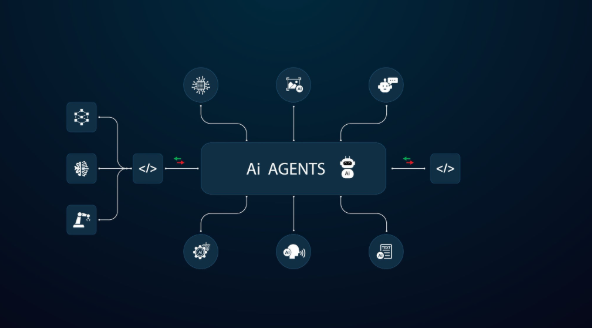
Simple version: it's the infrastructure layer that lets you build, run, and manage agents without reinventing the wheel every time. Orchestration, memory, monitoring, multi-agent coordination, all living under one SDK instead of six disconnected libraries.
Doesn't sound like much on paper. In practice, it changes everything about how fast you can actually ship.
Nobody Talks Enough About Orchestration
Everyone gets hyped about the agent itself. The prompt, the personality, the clever tool use. Fair enough, that's the fun part.
But what happens when your agent needs to call three tools, wait on a slow API, then hand results downstream? That's the boring part nobody demos. An AI orchestrator is what handles retries, sequencing, failures, all the stuff that breaks quietly at 2am. Skip it and your AI workflow automation turns into a spaghetti pile of if-else statements. It'll work fine until it doesn't.
Where Most Agents Quietly Fall Apart: Memory
Here's a problem tutorials never show you. Your agent forgets everything between sessions. Or, arguably worse, it remembers the wrong thing and states it with total confidence.
AI agent memory isn't a bonus feature. It's what separates something that feels genuinely useful from something that resets to zero every single conversation. You need real state management here, not just messages getting passed back and forth and hoping context survives.
RAG Isn't Really Optional at This Point
If your agent's still answering questions off stale training data, it's going to say something wrong eventually. Confidently, too. That's the annoying part.
A decent RAG pipeline solves this by pulling current info from your actual documents before the model ever responds. Building a working RAG application means wiring together a vector database, a document loader, and your agent logic, and getting the RAG architecture right is honestly what separates agents that cite real sources from ones that just guess convincingly.
Sometimes One Agent Isn't Enough
Some jobs need a whole team, not a single agent doing everything badly. A research agent digs up information. A writer agent drafts something with it. A reviewer agent checks the work before it ships to anyone.
That's multi-agent systems, basically, and it's fast becoming the default for anything past a simple Q&A bot. Agent orchestration gets messier once multiple agents are involved though, since each one needs its own context without stepping on the others' toes. A decent platform handles those handoffs for you. Otherwise you're writing custom routing logic for every single workflow, which gets old fast.
You Can't Debug What You Can't See
Agent breaks in production. Now what? Without real AI observability, you're just guessing which step failed and why, scrolling logs at midnight hoping something jumps out.
Traceability means following a request through every tool call, every model response, every decision the agent actually made along the way. Pair that with prompt management and you can test changes before they hit real users, instead of finding out through a wave of confused support tickets.
Where DNotifier Fits In
This is more or less what DNotifier was built to solve. One SDK, one API, multi-model support, so you're not locked into a single provider forever. Orchestration, agent memory, RAG pipelines, multi-agent coordination, it's all there instead of being spread across five different tools you have to babysit.
It's fewer moving parts. Monitoring and traceability come built in rather than bolted on afterward as an afterthought. For teams tired of managing infrastructure instead of just building agents, that tends to matter more in practice than it does on a comparison chart.
FAQ
What is DNotifier?
It's an AI agent development platform. One SDK handles orchestration, memory, RAG, and multi-agent workflows so you're not stitching separate tools together yourself.
What is DNotifier used for?
Mostly building and running agents that actually survive contact with production. Research agents, support agents, multi-agent setups that need to coordinate without falling apart.
Is DNotifier good for production?
Yes, that's really the point of it. Observability, traceability, and persistence are built in from the start, not tacked on after something breaks.
How do I build an AI agent with DNotifier?
Start with the SDK, define the agent's tools and memory, connect a model. Add RAG or multi-agent coordination later as things get more complex.
The Bottom Line
The gap between a demo agent and a production agent isn't the model. It's everything around it—memory, orchestration, retrieval, and visibility when something goes wrong.
DNotifier puts that infrastructure in one place so you stop duct-taping tools together and start shipping agents that hold up under real use.
Explore DNotifier's SDK at dnotifier.com and see how orchestration, memory, RAG, and multi-agent coordination work in a single platform.
Related articles
What Is an AI Agent Control Plane?
Agent code plans steps; the control plane enforces security, logs traces, and validates permissions. Learn what an AI agent control plane is, why teams need one, and how DNotifier delivers it.
What Is AI Agent Infrastructure? | DNotifier
Demo agents break in production when the plumbing isn't there. Learn what AI agent infrastructure actually means, the core layers you need, and why most teams skip them until it's too late.
AI Agent SDK: Build Agents That Actually Work
The model call takes ten minutes. Memory, tool calls, and multi-agent coordination take weeks. Learn what an AI agent SDK actually handles and how DNotifier keeps you from gluing five libraries together.