What Is AI Agent Infrastructure? | DNotifier

What Is AI Agent Infrastructure? A Straight Answer for Builders
Ever tried moving an agent from a demo to something real? You know the problem. It works fine in testing. Then it doesn't, and you've got no idea why. That's not a model problem. It's a missing infrastructure problem, and it catches almost everyone off guard.
Most teams pour all their attention into the model and forget what's underneath it. But agents rarely fail because the model is weak. They fail because nobody built the plumbing to hold them up once real traffic hits.
So let's break it down. What does AI agent infrastructure actually mean? Why does it matter so much? And what does a solid agent infrastructure layer look like once you're past the demo stage?
What Is AI Agent Infrastructure?
Simple version: it's the backend layer that lets agents run, talk to each other, and stay reliable outside a sandbox. Orchestration, memory, monitoring, communication. All of it. Take that away and an agent is just a script waiting to break.
Think about a car engine versus an actual car. The engine does the work, sure. But you still need wheels, brakes, a chassis, something to hold it all together. That's the role an AI agent infrastructure platform plays. Nobody drives an engine.
Why Agents Need a Real Backend, Not Just a Model
Here's the honest answer. Agents need infrastructure because they don't work alone. They call tools, hand tasks to other agents, retry things that fail, and they need eyes on them constantly. A raw model can't do any of that by itself. It was never built to.
An AI agent backend gives your agents somewhere predictable to run. It tracks state between steps so nothing gets lost. It logs what happened the moment something breaks, instead of leaving you to guess. And it lets you test a prompt change before it goes live, not after users hit it.
Skip this part and you're not saving time. You're just moving the pain to later.
The Core Layers of an Agent Infrastructure Architecture
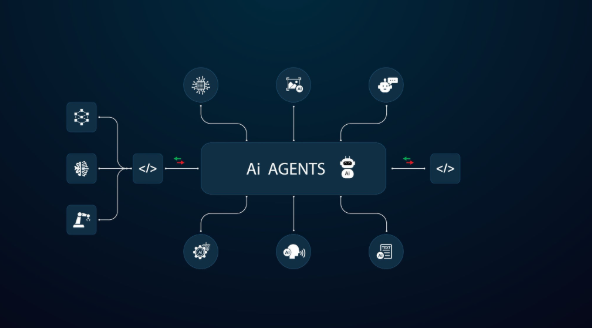
A working agent infrastructure architecture usually comes down to a handful of pieces, and they need to work together, not in isolation.
Orchestration. Decides what runs next, in what order, under what conditions. This is the traffic controller.
Multi-agent communication. Agents talk to each other more than people expect. A real-time pub/sub layer keeps that fast, instead of everything stuck polling in circles.
Monitoring and observability. You need to actually see what your agents are doing. Not assume. Good observability shows latency, errors, token usage, as it's happening, not after the fact.
Traceability. Something breaks four steps into a chain. Now what? Traceability tells you exactly where it went wrong. Without it, you're debugging blind, and that gets expensive fast.
Semantic search. Agents pulling context from a knowledge base need semantic search, not keyword matching. Keyword matching misses the point half the time anyway.
Miss any one of these, and that's usually where things fall apart first.
Building It Yourself vs Using an Agent Infrastructure Platform
You can build this yourself. Loads of teams try. But wiring together separate tools for orchestration, monitoring, and agent communication eats real engineering time, and it gets messier the second you add more agents. It rarely stays clean past agent number three.
This is where an actual AI agent infrastructure platform starts to make sense. DNotifier gives you one SDK and one API for orchestration, multi-agent workflows, monitoring, and traceability, all in one place, with support for multiple models. Instead of duct-taping five tools together, you plug into something built for exactly this.
You're still writing the logic. The platform just takes the plumbing off your plate, the stuff that used to eat your whole week.
What Breaks When You Skip Proper Infrastructure
Teams that skip AI infrastructure for agents tend to hit the same wall, over and over. Agent works great in testing. Then it fails quietly in production, and nobody notices until a user's already frustrated and gone.
No monitoring? You won't know an agent's gotten slow until people start leaving. No traceability? A failed multi-step task takes hours to untangle instead of minutes. No real orchestration? Agents step on each other, or loop on the same failed action forever.
None of that's a model issue. Every bit of it traces back to infrastructure that just wasn't there.
Choosing the Right Backend for Production
Autonomous agent infrastructure has to survive real conditions. Traffic spikes. Partial failures. Agents that depend on each other to finish a job. LLM infrastructure for agents in production needs to be boring and dependable. Not clever. Boring works.
So when you're evaluating an agent infrastructure layer, ask a few blunt questions. Can you trace a failure to its source in minutes, not hours? Can you test a prompt before it ships to real users? Can your agents actually talk to each other without you writing custom glue code every time?
If you're answering no to any of that, you're not ready for production traffic. Not yet.
FAQ
What's the difference between an AI agent and AI agent infrastructure?
The agent handles the decisions. The infrastructure is what keeps it running reliably once real users show up. Neither one holds up alone for long.
Do I need agent infrastructure for a single simple agent?
Probably not right away. But the second you add a second agent, retries, or actual traffic, you'll need monitoring and orchestration fast, and you'll wish you'd had it sooner.
Can I bolt on infrastructure later instead of building it upfront?
You can. It's just harder. Retrofitting monitoring and traceability into something already live usually means rebuilding parts you already shipped, and that's never fun.
What's the biggest mistake teams make with agent backends?
Treating infrastructure like an afterthought. Most production failures come back to missing observability, not a bad model pick. It's almost never the model.
The Bottom Line
AI agent infrastructure isn't optional once you're past the demo stage. It's the layer that keeps agents reliable, traceable, and coordinated when real traffic hits.
DNotifier gives you orchestration, monitoring, traceability, and multi-agent communication in one SDK—so you spend less time on plumbing and more time building agents that actually survive production.
Explore DNotifier's SDK at dnotifier.com and see what a production-ready agent infrastructure layer looks like in practice.
Related articles
What Is an AI Agent Control Plane?
Agent code plans steps; the control plane enforces security, logs traces, and validates permissions. Learn what an AI agent control plane is, why teams need one, and how DNotifier delivers it.
Multi-Agent Systems in the AI World
Single models buckle under complex tasks. Learn why the AI world is shifting to specialized agent teams, how they communicate, and what orchestration and observability take to get right.
What an AI Agent Dev Platform Actually Does | DNotifier
Demo agents are easy. Adding memory, a second agent, and production monitoring is where things fall apart. Learn what an AI agent development platform actually handles—and why it matters once you ship.