Ollama vs. DNotifier's Cloud Providers
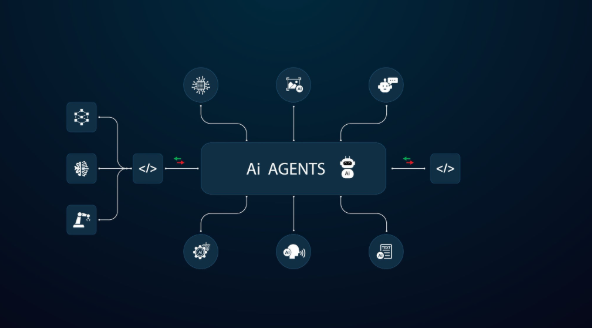
Part of a series on running AI workflows across model providers — this one lines up all eight providers side by side without picking a single winner.
This series has now covered eight ways to get a model to answer a sendAI() call through DNotifier — seven of them cloud vendors with their own accounts, pricing, and lifecycles, and one, Ollama, running on hardware you control entirely. This article puts them side by side honestly, not to crown a winner, but because the right answer genuinely depends on what a given application needs.
The structural difference, restated plainly
Every cloud provider covered in this series — OpenAI, Anthropic, Gemini, Hugging Face, AWS Bedrock, Perplexity, Azure AI — shares a basic shape: an account, an authentication credential, a network call to that vendor's infrastructure, and a bill that scales with usage. Ollama shares none of that shape. There's no account, no credential by default, no vendor infrastructure involved, and no usage-based bill — just your own hardware, reachable (or not) from wherever DNotifier's AI runtime executes.
Eight providers, one calling convention — but only one of them isn't actually a vendor at all.
Where each genuinely wins
Cloud providers win decisively on raw capability ceiling — the largest, most capable frontier models in this series are cloud-hosted, and no local hardware most teams can afford matches that ceiling today. Cloud providers also win on operational simplicity: no hardware to provision, no reachability to configure, no update cycle to personally manage, and — as covered across this series — a vendor actively managing model retirement, however imperfect that process sometimes is.
Ollama wins decisively where data genuinely cannot leave a specific boundary, where the environment is disconnected entirely, or where sustained, predictable, high-volume usage makes a fixed hardware cost a better bet than an ongoing metered bill — the same three cases When Local Beats Cloud laid out directly.
The same coexistence pattern, one more time
This series has made the same point about coexistence for AgentCore, for Foundry Agent Service, and for Perplexity's own agent capabilities: none of these choices is exclusive. A DNotifier Workflow can route one step to Ollama for a task that genuinely needs local-only processing, and another step to any cloud provider covered in this series for a task that needs more capability or doesn't carry the same data constraint — exactly the pattern the compliance-review use case in When Local Beats Cloud demonstrated directly.
The same lesson this series keeps landing on: the right architecture usually isn't one provider — it's the right provider per step.
An honest summary of the whole series' throughline
Every batch in this series has surfaced its own version of provider-specific complexity: OpenAI and Anthropic's deprecation cycles, Gemini's distinct API shape, Hugging Face's licensing nuance, Bedrock's IAM setup and AgentCore layer, Perplexity's Sonar-to-Agent-API transition, Azure's three-name landscape and Assistants API retirement. Ollama's version of that complexity is different in kind — it's not a vendor changing something out from under you, it's the responsibility of running infrastructure yourself. DNotifier's role across all eight is the same: one calling convention, so switching which provider handles a given step — cloud to cloud, or cloud to local — is a configuration change rather than an application rewrite.
Frequently asked questions
Is it unusual to use Ollama alongside cloud providers in the same application?
No — mixing is a normal, well-supported pattern in DNotifier, not an edge case; the use cases in this batch are both typical of how teams actually combine them.
Which provider in this series is "best" overall?
There isn't one — every batch in this series has made the same point in a different way: the right provider depends on what a specific task, workload, and constraint actually requires.
Does adding an Ollama step to a workflow complicate the rest of the application?
Not structurally — DNotifier's Workflow and ctx.state pattern work identically regardless of which providers are behind each step.
Should a team default to cloud providers unless they have a specific reason not to?
That's a reasonable default for most applications, given the operational simplicity cloud providers offer — but "a specific reason not to" is a real, common category, not a rare edge case, as this batch's use cases have shown.
The Bottom Line
Next in this series: once your Ollama endpoint is reachable enough for DNotifier to call it, what you've actually exposed — and how to close it back down.
Read part nine: Securing a Reachable Ollama Endpoint. Explore dnotifier.com.
DNotifier × Ollama
Part 8 of 10
- Part 1Ollama on DNotifier: Setup Guide
- Part 2What Makes Ollama Different?
- Part 3Choosing a Model to Run Locally
- Part 4Ollama Hardware: VRAM & Quantization
- Part 5When Local Beats Cloud (And When It Doesn't)
- Part 6Tool Calling on Local Models
- Part 7Keeping Your Local Models Fresh
- Part 8Ollama vs. DNotifier's Cloud Providers
- Part 9Securing a Reachable Ollama Endpoint
- Part 10This Series, Complete: 8 Providers, One API
Related articles

Keeping Your Local Models Fresh
Part seven of the DNotifier × Ollama series — no vendor retirement schedule, manual ollama pull cycles, and quarterly freshness checks.

Securing a Reachable Ollama Endpoint
Part nine of the DNotifier × Ollama series — reachability versus security, reverse proxies, VPNs, and avoiding open inference on the public internet.
This Series, Complete: 8 Providers, One API
Part ten of the DNotifier × Ollama series — closing the full eight-provider arc: OpenAI through Ollama, one sendAI() pattern, and deliberate per-step routing.